
Industrial News
How to Choose a Pharmaceutical Aluminum Tube Supplier: 10 Questions to Ask
Views : 155
Update time : 2026-09-04 14:01:54

Choosing a pharmaceutical aluminum tube supplier is an important decision for pharmaceutical manufacturers developing ointments, creams, gels, lotions, and other topical products.
The supplier does not only provide a packaging container. The tube material, internal coating, manufacturing environment, quality control, documentation, and production consistency can all affect the packaging project.
Before selecting a supplier, pharmaceutical companies should ask several important questions.
1. Does the Supplier Have Pharmaceutical Packaging Experience?
Pharmaceutical packaging is different from ordinary consumer packaging.
A supplier should understand the specific requirements associated with pharmaceutical products, including cleanliness, material compatibility, quality control, specifications, and documentation.
Ask how long the supplier has been manufacturing pharmaceutical packaging and what types of pharmaceutical products its tubes are used for.
2. Are the Tubes Manufactured in a Controlled Environment?
The manufacturing environment is an important consideration for pharmaceutical packaging.
Ask whether production takes place in controlled cleanrooms and what cleanroom classification is used.
You can also ask how environmental conditions such as airborne particles, temperature, humidity, pressure differences, and air changes are monitored.
3. What Pharmaceutical Aluminum Tube Sizes Are Available?
Different pharmaceutical products require different filling volumes and packaging dimensions.
Before selecting a supplier, confirm whether the supplier can provide the required tube diameter, length, capacity, and closure configuration.
Xinrontube currently provides pharmaceutical aluminum tubes in several diameter options, including 13.5 mm, 16 mm, 19 mm, and 22 mm.
4. What Internal Coating Options Are Available?
Internal coating can be an important part of pharmaceutical aluminum tube construction.
It helps separate the pharmaceutical formulation from the aluminum substrate and can affect compatibility between the packaging and the product.
The supplier should be able to explain the available coating system and provide relevant technical information for evaluation.
5. Can the Supplier Support Pharmaceutical Documentation?
International pharmaceutical projects may require technical documentation and regulatory information.
Ask the supplier what documentation can be provided for the target market.
For example, U.S. pharmaceutical customers may have specific requirements related to Drug Master File documentation.
6. What Quality Tests Are Performed?
A reliable pharmaceutical tube supplier should have defined quality control procedures.
Depending on the specification, relevant quality considerations may include:
* Appearance
* Dimensions
* Tube integrity
* Internal coating
* Chemical stability
* Collapsibility
* Microbial limits
* Printing
* Packaging cleanliness
The exact testing requirements should be agreed according to the product specification.
7. Can the Supplier Provide Samples?
Samples can help pharmaceutical companies evaluate tube dimensions, appearance, printing, closures, filling compatibility, and other project requirements before mass production.
Ask whether the supplier can provide samples and what information is required to prepare them.
8. Can the Supplier Provide Customized Tubes?
A pharmaceutical company may require more than a standard tube.
Customization may include:
* Tube diameter
* Tube length
* Capacity
* Printing
* Internal coating
* Nozzle
* Closure
* Packaging configuration
A supplier with flexible manufacturing capabilities can make the development process easier.
9. Does the Supplier Have Stable Production Capacity?
For commercial pharmaceutical products, production consistency and supply stability are important.
Ask about production lines, manufacturing capacity, quality control systems, lead times, and the supplier's ability to support repeat orders.
A packaging supplier should be able to provide a realistic production plan based on the actual project requirements.
10. Can the Supplier Provide Long-Term Technical Support?
A good pharmaceutical packaging supplier should be able to communicate with the customer throughout the project.
Packaging requirements can change during product development, registration, market expansion, or commercial production.
A supplier that can provide technical communication and customized packaging support can become a long-term partner rather than simply a packaging vendor.
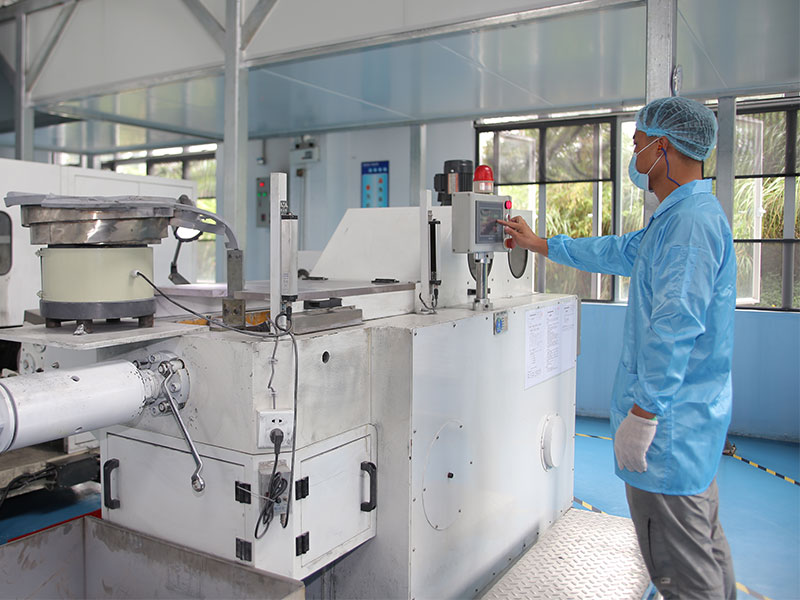
What Makes a Good Pharmaceutical Aluminum Tube Supplier?
A good supplier should combine:
**Pharmaceutical experience**
**Controlled manufacturing**
**Quality management**
**Appropriate documentation**
**Stable production**
**Customization capability**
**Technical communication**
**Long-term service**
Price is important, but pharmaceutical packaging should not be evaluated on price alone.
The cost of packaging problems, inconsistent quality, product compatibility issues, or supply interruptions can be much higher than the initial difference in unit price.
Why Consider Xinrontube?
Xinrontube specializes in pharmaceutical-grade collapsible aluminum tubes for ointments, creams, gels, lotions, and other topical healthcare applications.
The company operates controlled cleanroom production facilities and provides different pharmaceutical aluminum tube sizes.
Xinrontube also supports international customers with pharmaceutical packaging documentation and customized tube solutions.
For companies looking for a pharmaceutical aluminum tube supplier, the right approach is to discuss the formulation, filling volume, tube dimensions, target market, documentation requirements, and production expectations before placing an order.
Contact Xinrontube to discuss your pharmaceutical aluminum tube requirements.
Related News


EU Pharmaceutical Packaging: What Buyers Should Check in 2026
Sep .14.2026
What should pharmaceutical packaging buyers check in 2026? Learn about material, internal coating, quality control, documentation and sustainability when selecting pharmaceutical aluminum tubes.

